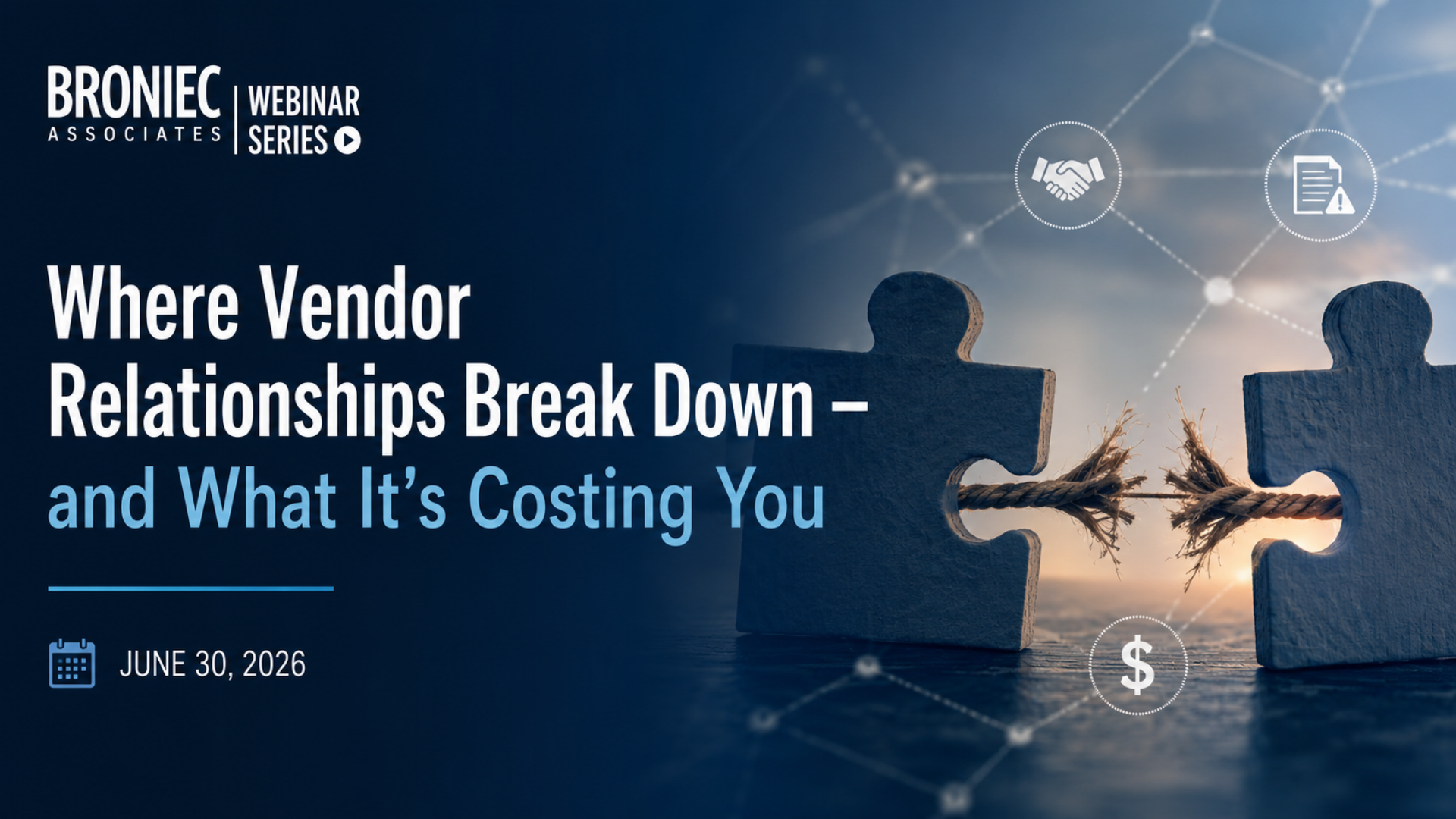
Where Vendor Relationships Break Down and What It’s Costing You
Vendor relationships affect far more than purchasing and payments. When onboarding, communication, payment processing, and oversight break down, organizations can face duplicate payments, unresolved credits, operational inefficiencies, and increased financial risk. Explore where these breakdowns occur and the practical steps that help strengthen vendor management.
Broniec Associates
Broniec Associates
What Do Vendor Relationship Breakdowns Really Cost?
Strong vendor relationships depend on more than negotiated contracts and timely payments. They require coordination across procurement, accounts payable, operations, and suppliers throughout the entire vendor lifecycle.
When those processes become disconnected, seemingly minor issues can develop into significant financial and operational exposure. Duplicate vendor records, inconsistent billing practices, misapplied payments, and unresolved credits can create costs that remain hidden long after the original transaction.
In this webinar, Broniec Associates' Steve Schwarzer and Tim Stewart draw from real-world AP recovery audit experience to examine where vendor relationships break down, how these issues affect organizations, and what stronger management practices look like.
Many vendor relationship problems originate in internal process gaps. Identifying those root causes can be just as important as recovering the resulting overpayments.
Financial Costs
Duplicate payments, overlooked credits, missed discounts, and pricing discrepancies can leave recoverable funds unidentified and affect profitability.
Operational Costs
Time-consuming reconciliations, repeated exception handling, and unclear ownership increase the workload across AP and procurement while limiting available resources for higher-value activities.
Relationship Costs
Poor communication, unresolved disputes, and inconsistent payment practices can create supplier friction, delay responses, and complicate efforts to resolve outstanding account discrepancies.
Four Common Vendor Management Breakdown Areas
Vendor relationship challenges often begin with gaps in process ownership, communication, and financial controls. Understanding where these breakdowns occur is the first step toward preventing recurring discrepancies and strengthening supplier relationships.
Vendor Onboarding and Setup
Inconsistent onboarding procedures, duplicate vendor master records, and unclear invoice requirements can create downstream processing errors. When multiple departments can establish or modify vendor records without consistent controls, duplicate payments and inaccurate information become more difficult to prevent.
Establish standardized onboarding procedures, verify supplier information, define invoice submission requirements, and communicate payment and credit handling policies from the outset.
Communication and Policy Alignment
Misaligned expectations between accounts payable, procurement, operations, and suppliers can delay dispute resolution, complicate billing corrections, and create confusion around payment terms. Without reliable contacts and clear procedures, even routine discrepancies can become prolonged account issues.
Establish direct communication channels between AP and supplier AR teams, document billing expectations, and ensure policies are communicated consistently throughout the vendor relationship.
Payment Execution and Credit Management
Misapplied payments, duplicate invoices, and unresolved vendor credits can create significant reconciliation challenges. In some cases, suppliers may apply overpayments to outstanding invoices or move older credits off active statements, making available balances harder to identify.
Review remittance advice practices, investigate duplicate payment flags, establish clear credit and refund procedures, and periodically reconcile supplier account balances.
Oversight and Accountability
When responsibilities are unclear or supplier information is fragmented across systems, organizations may overlook recurring errors, missed discounts, pricing discrepancies, and supplier performance concerns. Reactive exception management can further increase administrative costs.
Define ownership across departments, monitor vendor performance and contractual compliance, maintain accurate master data, and use independent AP review findings to identify recurring root causes.
Strong vendor management begins with clear expectations, consistent processes, and effective communication. Independent AP recovery audits can provide an additional layer of insight by identifying discrepancies and the underlying conditions that allow them to occur.
Meet the Panel
Drawing on real-world accounts payable recovery audit experience, our panelists share practical perspectives on vendor management, financial controls, and the importance of effective communication.

Steve Schwarzer
Denver Branch Manager Broniec AssociatesSteve brings hands-on experience conducting AP recovery audits across diverse industries, including financial services, hospitality, healthcare, and manufacturing.
His work includes identifying supplier account discrepancies, investigating duplicate payments, resolving outstanding vendor credits, and navigating the challenges that arise when supplier communication and payment practices become misaligned.
Webinar Panelist
Tim Stewart
VP, Strategic Initiatives Broniec AssociatesTim brings an extensive operational leadership perspective to the discussion, with experience in process improvement, organizational efficiency, and strategic initiatives.
His insights focus on strengthening vendor lifecycle management, improving coordination between procurement, accounts payable, and operations, and identifying the underlying process weaknesses that contribute to financial discrepancies.
Webinar PanelistFrequently Asked Questions About Vendor Relationships
During the webinar, attendees raised practical questions about vendor policies, supplier communication, payment processing, and accountability. Explore highlights from the discussion below.
How can organizations enforce a "no PO, no pay" policy without damaging vendor relationships?
The most effective approach is to establish purchasing and payment requirements during vendor onboarding, before transactions begin.
For existing suppliers, communicate the new policy formally, explain expectations, and provide a direct accounts payable contact for questions. Clear communication helps suppliers understand the process and supports continued cooperation.
What are the early warning signs that a vendor relationship is beginning to break down?
Warning signs may include late deliveries, inaccurate quantities, product quality concerns, invoices that do not follow established submission requirements, and repeated payment misapplications.
Financial discrepancies can be particularly revealing. Reviewing supplier accounts receivable aging reports periodically can help identify unapplied payments, unresolved credits, and outstanding balances that warrant investigation.
What is the best way to address suppliers that consistently misapply payments or mishandle credits?
Begin by confirming that the supplier receives accurate remittance advice and that it reaches the personnel responsible for posting payments. In some cases, payment instructions may be missing or directed to the wrong department.
Establish direct communication between the buyer's AP personnel and the supplier's AR personnel. Address discrepancies promptly, clarify how payments should be applied, and agree on appropriate procedures for resolving credits and overpayments.
Who should own vendor relationships within an organization?
Vendor relationships typically require shared responsibility across operations, procurement, and accounts payable. Each department contributes at different stages of the supplier lifecycle.
Operations identifies business requirements, procurement manages sourcing and negotiated terms, and AP supports accurate vendor records and timely payments. Clear responsibilities and coordination between these functions help maintain strong supplier relationships.
How can organizations measure vendor relationship effectiveness and supplier satisfaction?
Useful indicators include whether invoices are paid within agreed terms, the accuracy and clarity of purchase orders, and supplier performance against negotiated pricing, quantities, delivery requirements, and quality standards.
Periodic conversations with suppliers, such as annual or semiannual reviews, also provide opportunities to discuss concerns, clarify expectations, and identify improvements.
Are vendor relationship breakdowns primarily supplier problems or internal process problems?
Both can contribute, but the webinar panelists emphasized that many of the discrepancies identified during AP recovery audits originate in internal processes.
Manual data entry errors, inconsistent invoice handling, duplicate vendor records, and technology implementation challenges can all create exposure. Reviewing the interaction between people, processes, and technology helps organizations identify underlying causes and opportunities to strengthen controls.
Continue Learning With Broniec Insights
Browse additional webinars and explore related research, case studies, articles, and practical resources created for accounts payable and finance professionals.